Science library
Read 14 science explanations with worked examples and sources, then try experiments in space, cells, particles and Earth’s interior.
Three questions you can test
Choose a model, change one assumption, and keep a link to your result. Each experiment shows its calculation and sources.
Start with a question, understand it with a picture
No need to know the formula first. Look at an example, follow the calculation, then check the evidence.
Find your next question
Explore space, living things and the world beneath your feet. Every reading connects a question to a calculation and its sources.
No matching topics. Try a shorter keyword or clear the search to see everything.
Space & distance
- Why the Solar System is mostly space
Build a one-scale Solar System thought experiment and distinguish the size of a planet from the spacing of its orbit.
- How far is a light-year?
Derive a light-year from the speed of light and a stated year convention, then understand what a light-time calculation can tell you.
- Measuring the size of Earth
Follow a spherical Earth model from radius to diameter and circumference, and see where the real shape of Earth changes the answer.
- Where does satellite altitude start?
Separate altitude, orbital radius and path length using a reproducible spherical example of geostationary orbit.
Cells, molecules & particles
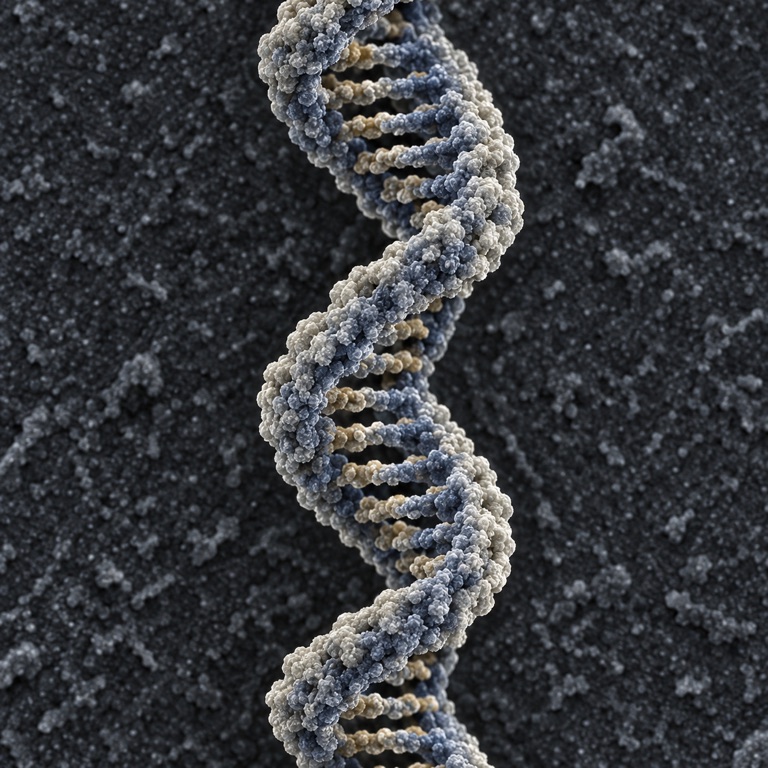
- A red blood cell is 3,750 DNA widths across
Compare a representative cell diameter with DNA width, distinguish linear and volume ratios, and examine the limits of the analogy.
- Measuring a single strand of hair
Explore cross-section shape, sample variation and uncertainty with a reproducible hair-to-DNA scale calculation.
- Micro to nano: a thousandfold step
Convert between SI prefixes, compare linear and volume scales, and avoid treating a unit marker as a measured organism.
- What defines the size of an atom?
Read the Bohr radius as a characteristic length and distinguish electron-cloud illustrations from photographs and measured boundaries.
- What a proton’s charge radius tells us
Understand RMS charge radius, measurement uncertainty and the difference between an inferred distribution and a hard boundary.
- Searching for structure at 10⁻²⁰ metres
Read a collider exclusion length as a model-dependent search result, rather than a photograph or measured quark diameter.
Earth & water
- Reading Earth’s interior with seismic waves
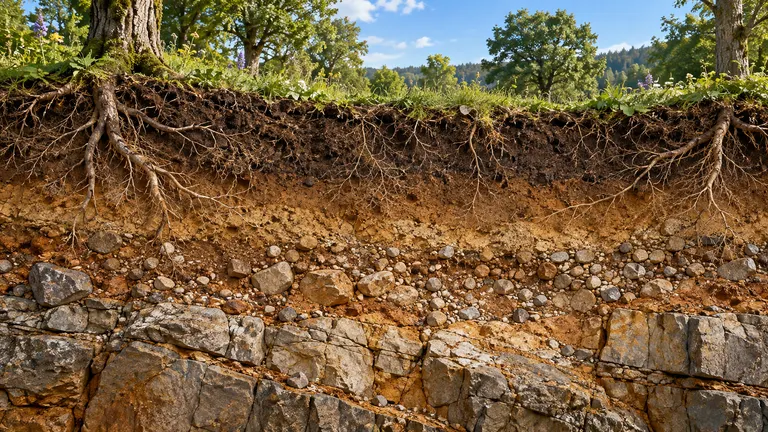
Separate seismic observations, physical inference and PREM-based calculations, including the difference between centre gravity and pressure.
- Tsunami height, depth and runup
Separate coastal height, inland flow depth and runup, then derive the limited still-water load shown in the tsunami experiment.
Measurement & evidence
- Understanding linear and logarithmic scales
See how equal differences and equal ratios place the same numbers on a ruler.
- How precise is a size comparison?
Distinguish definitions, measurements, representative choices and model-dependent bounds, then test how uncertainty affects a ratio.
Put an idea to the test
Change one variable. Compare the result with your prediction.
Logarithmic scales
Why does one step mean ten times larger?
Switch a ruler between equal differences and equal ratios.
Astronomical distance
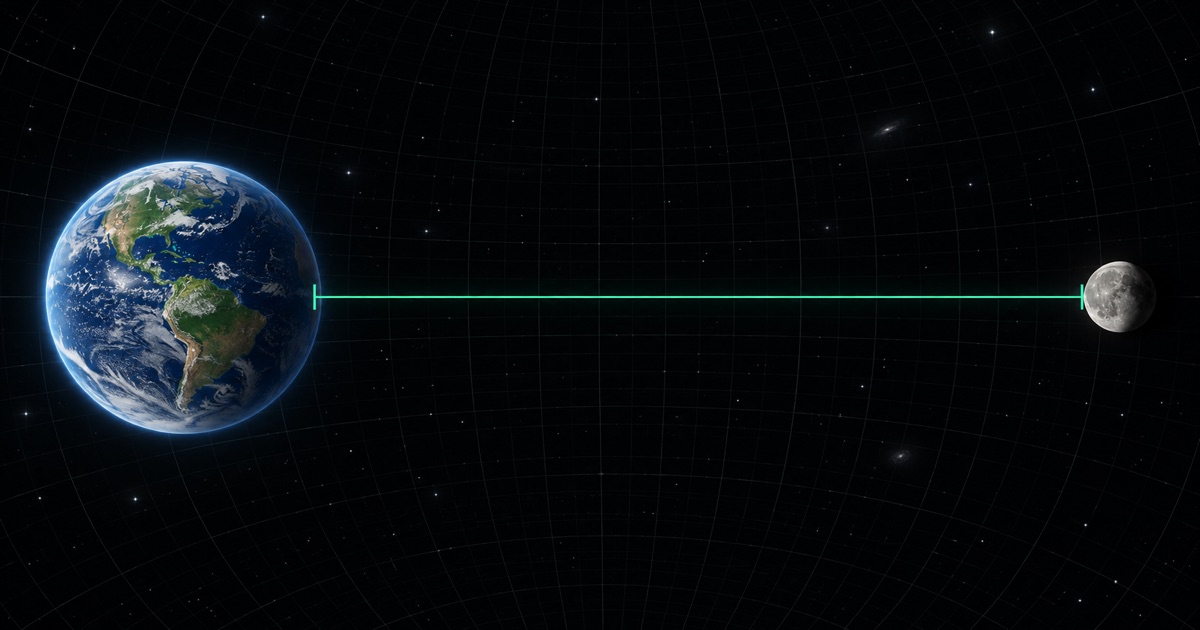
How much space is really between Earth and the Moon?
Move the Moon, build a miniature model, and calculate a light-time delay.
Micro measurements
Is every tiny number a particle diameter?
Compare hair, DNA and a proton while keeping the measurement definitions visible.
Evidence and inference
How can we know what is inside Earth?
Test a seismic-wave model and follow pressure and gravity with depth.
Methods and uncertainty
What makes a comparison trustworthy?
Follow a worked calculation from reference value to ratio, with its assumptions.